Digital Vintages: How IoT Sensors and RFID Tracking Automate Collection Audits
You are a discerning individual, recognizing that the curation of a significant wine collection transcends mere acquisition; it necessitates meticulous stewardship. The inherent value, both financial and sentimental, of your liquid assets demands an approach rooted in precision and foresight. In an era of escalating complexity and burgeoning collections, analogue inventory methods prove increasingly inadequate, ceding ground to sophisticated digital solutions. Efficiency, in this context, is not a luxury; it is an imperative. This document outlines the strategic imperative of IoT-driven wine inventory management, detailing its technical underpinnings and prescriptive applications for the discerning collector.
The traditional cellar book or rudimentary spreadsheet, while once functional for nascent collections, presents inherent vulnerabilities in today’s dynamic market. Manual entry is a vector for human error, leading to discrepancies in vintage, appellation, bottle count, and crucial maturity windows. Moreover, these methods offer a static snapshot, failing to provide the real-time, actionable intelligence critical for optimizing investment and enjoyment.
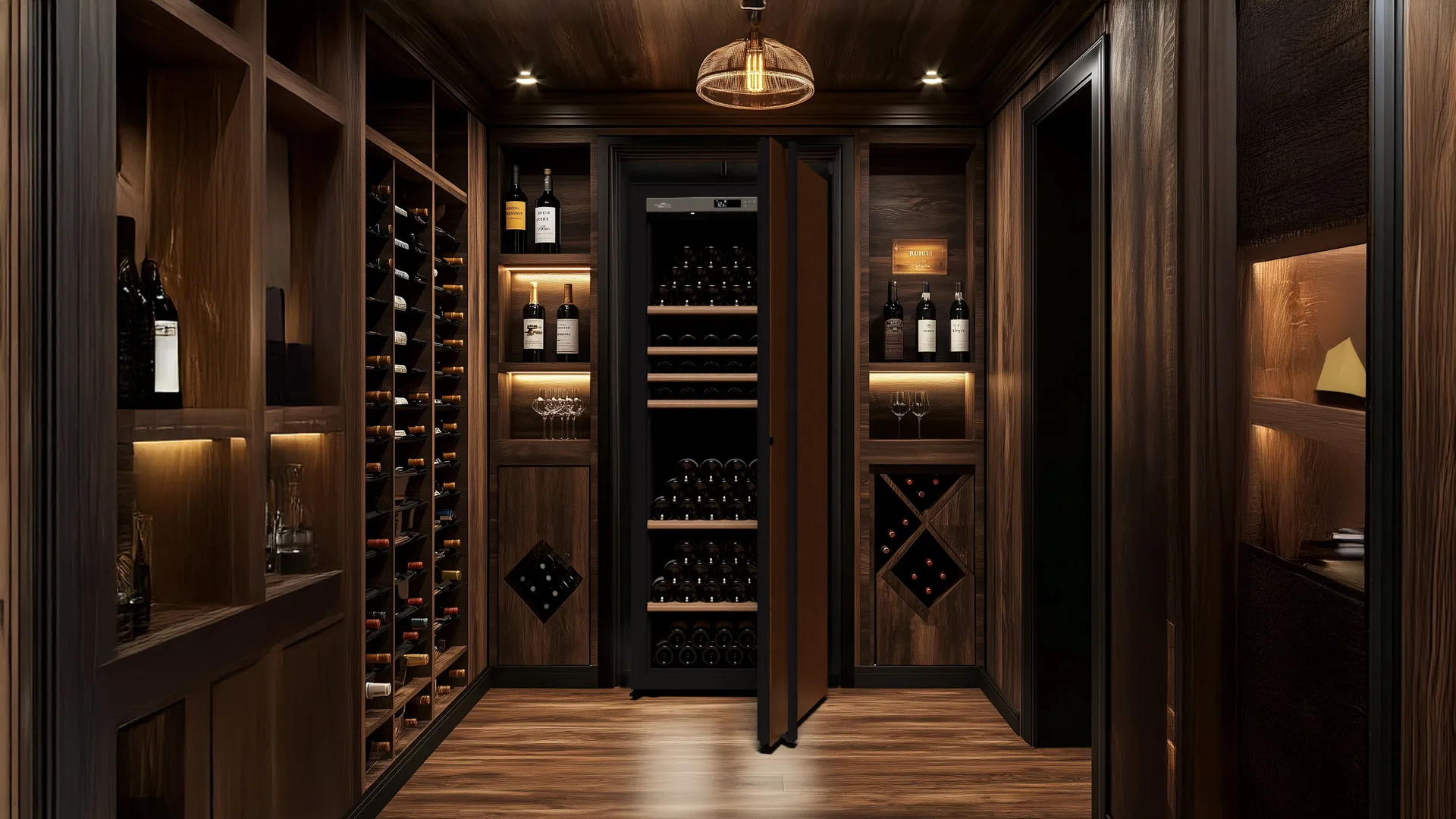
The Limitations of Manual Inventory
- Error Propagation: Typographical errors, overlooked entries, and misidentified bottles can propagate through an inventory, leading to significant inaccuracies and potential misvaluation.
- Lack of Granularity: Traditional methods often fail to capture nuanced data points such as precise cellar location, acquisition cost, or the specific organoleptic profile anticipated upon maturation. This absence of granular detail hinders strategic decision-making.
- Static Data: A non-IoT inventory is inherently static. It offers no immediate insight into the current state of atmospheric conditions within the storage environment, nor does it provide predictive analytics regarding optimal consumption windows or market trends impacting asset value. This stands in stark contrast to the dynamic insights offered by interconnected systems.
IoT Integration: A Paradigm Shift in Cellar Management
The Internet of Things (IoT) represents a fundamental shift in how physical assets are monitored and managed. By embedding sensors and connectivity into everyday objects, IoT facilitates the collection and exchange of data, transforming passive data points into active intelligence. For wine, this translates into a comprehensive, real-time observatory for each bottle, effectively digitalizing the entire lifecycle of your liquid assets.
Sensor Technology and Data Acquisition
Central to IoT wine inventory management are diverse sensor technologies. These devices are strategically deployed within the storage environment and, increasingly, directly onto individual bottles or their immediate racking.
- Environmental Sensors: Thermometers, hygrometers, and vibration sensors constantly monitor the microclimate within your cellar. These provide real-time data on ambient temperature, relative humidity, and any discernible mechanical oscillations. Deviations from established parameters trigger immediate alerts, mitigating potential damage to the integrity of the wine.
- RFID and NFC Tags: Radio-Frequency Identification (RFID) and Near Field Communication (NFC) tags offer unique digital identities to each bottle. These passive or active tags can be affixed discreetly, allowing for instantaneous inventory checks, location tracking within the cellar, and verification of authenticity. A simple scan can reveal vintage, producer, appellation, and even tasting notes. Active RFID tags can periodically update their location and environmental context, enhancing spatial awareness.
- Weight Sensors (Emergent Technology): While not yet ubiquitous, nascent technologies involving miniaturized weight sensors integrated into bottle cradles could provide early detection of evaporation or seepage, flagging bottles requiring immediate inspection. This offers a highly granular level of integrity monitoring.
The Networked Cellar: Connectivity and Data Flow
The data collected by these sensors is transmitted wirelessly, typically via Wi-Fi, Bluetooth Low Energy (BLE), or proprietary low-power wide-area networks (LPWANs), to a central hub. This hub then aggregates and relays the information to a cloud-based platform.
- Data Aggregation and Cloud Storage: The aggregated data from all sensors is securely stored in the cloud. This provides a centralized, resilient repository for your entire collection’s vital statistics, accessible from any internet-enabled device.
- Analytics and Machine Learning: Sophisticated algorithms analyze this continuous data stream. Machine learning models can identify subtle trends in temperature fluctuations, predict optimal decanting times based on known chemical reactions, or even flag bottles approaching their peak maturity based on historical data patterns for similar vintages and producers.
Real-time Monitoring and Alert Systems: Proactive Preservation

The proactive preservation of your wine asset’s organoleptic integrity demands continuous vigilance. IoT systems transform reactive problem-solving into a proactive, preventative framework, safeguarding your investment against environmental degradation.
Environmental Integrity Thresholds
- Temperature Stability: Optimal storage temperature typically ranges between 12-14°C (54-57°F). IoT sensors provide continuous monitoring, detecting even minor fluctuations that can accelerate aging or introduce thermal shock. An alert is triggered if temperatures deviate beyond a pre-defined tolerance, enabling immediate corrective action.
- Humidity Control: Maintaining relative humidity between 60-75% is critical to prevent cork desiccation (too low) or mold growth (too high). Integrated hygrometers provide real-time readings, ensuring the vapor barrier created by the cork remains intact and functional.
- Vibration Attenuation: Micro-vibrations, often imperceptible to human senses, can disrupt the delicate chemical equilibrium within fine wine. Sensors can detect subtle mechanical oscillations, alerting you to potential sources of disturbance – from nearby machinery to structural movements – allowing for mitigation before long-term damage occurs.
Automated Notifications and Remote Intervention
- Multi-channel Alerts: Should any environmental parameter breach its pre-defined threshold, the system dispatches immediate notifications via email, SMS, or dedicated mobile application. This ensures critical information reaches you irrespective of your physical location.
- Predictive Maintenance: Beyond immediate alerts, advanced systems employ predictive analytics to anticipate potential hardware failures (e.g., a failing compressor in a wine cooler) based on operational data, allowing for maintenance before a critical breakdown impacts your collection. Remote adjustment of environmental controls, where physically integrated, further enhances proactive management.
Strategic Asset Management: Optimization and Valuation

Beyond preservation, an IoT-driven inventory management system transforms your collection from a mere aggregation of bottles into a dynamic, strategic asset. It provides the financial and logistical intelligence required for informed decision-making, whether for personal enjoyment, portfolio management, or eventual divestment.
Portfolio Valuation and Depreciation Tracking
- Real-time Valuation: Integration with professional wine market data feeds allows for continuous, real-time valuation of your entire collection. This provides an accurate, up-to-the-minute assessment of your liquid asset portfolio, reflecting market trends and auction results.
- Cost Basis Analysis: The system meticulously tracks the acquisition cost of each bottle, including associated duties, shipping, and storage fees. This provides a precise cost basis, essential for tax planning, insurance appraisal, and determining potential capital gains upon sale.
- Maturity Curve Integration: By referencing established maturity curves for specific wines and vintages, the system can project optimal consumption windows. This proactive guidance ensures you enjoy your wines at their peak, maximizing their organoleptic value, or choose to sell when their market value is highest.
Location Logistics and Accessibility
- Precise Cellar Mapping: Sophisticated systems can map your cellar with architectural precision, detailing the exact location of every bottle down to the individual bin or shelf. This eliminates the often frustrating and time-consuming search for a specific wine, transforming your cellar into an efficient, spatially intelligent repository.
- Batch Tracking: For larger acquisitions or consignments, batch tracking allows for efficient intake and outgoing procedures. RFID scanning can confirm the presence or absence of an entire case in seconds, drastically reducing human error and improving logistical efficiency.
- Inventory Reconciliation: The ability to perform rapid, automated inventory checks provides an unparalleled level of accuracy. Discrepancies between digital records and physical inventory are immediately flagged, ensuring ongoing data integrity and reducing the likelihood of pilferage or misplacement.
The Future of Wine Stewardship: An Invitation to Experience
The bespoke nature of luxury wine demands a stewardship strategy that is equally refined. An IoT-driven inventory management system is not merely a tool; it is a strategic partner, safeguarding your liquid assets and enhancing your enjoyment. It provides the technical precision that a Master Sommelier would respect, while offering an elegant, intuitive interface that a first-time collector can confidently embrace.
This advanced approach to cellar management moves beyond anecdotal observation, employing objective data to ensure optimal environmental controls, track the provenance and trajectory of each bottle, and provide a clear, real-time valuation of your investment. It allows you to transform your passion into a meticulously managed asset, ensuring each bottle reaches its full potential, both in terms of flavor profile and market value.
We extend an invitation to experience this technological integration firsthand. Our Walnut Creek showroom showcases the sophisticated hardware and intuitive software driving this paradigm shift. Observe how bespoke environmental chambers, embedded with an array of sensors, maintain the thermal mass and vapor barrier integrity critical for long-term aging. Witness the seamless, real-time data flow from individual bottles to a centralized dashboard, offering an unprecedented level of control and insight. This is not merely an inventory system; it is the definitive preservation technology for your irreplaceable liquid assets.
FAQs
What is IoT Wine Inventory Management?
IoT Wine Inventory Management refers to the use of Internet of Things (IoT) technology to monitor, track, and manage wine collections. Sensors and connected devices collect data such as temperature, humidity, and stock levels to ensure optimal storage conditions and efficient inventory control.
How does IoT improve wine storage conditions?
IoT devices continuously monitor environmental factors like temperature and humidity in wine cellars or storage areas. By providing real-time alerts and automated adjustments, IoT helps maintain ideal conditions that preserve wine quality and prevent spoilage.
Can IoT Wine Inventory Management track individual bottles?
Yes, IoT systems can use RFID tags, QR codes, or other tracking technologies to identify and monitor individual bottles. This allows for precise inventory tracking, easy location of specific wines, and detailed records of each bottle’s history and status.
What are the benefits of using IoT for wine inventory management?
Benefits include improved accuracy in inventory tracking, reduced risk of spoilage through environmental monitoring, enhanced efficiency in stock management, and the ability to access real-time data remotely. This leads to better decision-making and cost savings for wine collectors and businesses.
Is IoT Wine Inventory Management suitable for both personal and commercial use?
Yes, IoT Wine Inventory Management systems can be scaled to fit the needs of individual wine enthusiasts as well as large commercial wineries, distributors, and retailers. The technology is adaptable to different sizes and complexities of wine collections.